Last updated:
A leak on the supply pipe is yours to fix. Severn Trent says the pipe from the boundary stop tap to your house belongs to the homeowner, even where it crosses someone else’s land. Water supply pipe repair starts with knowing exactly where the leak is, because every extra hole in a drive or garden costs time and money to put back.
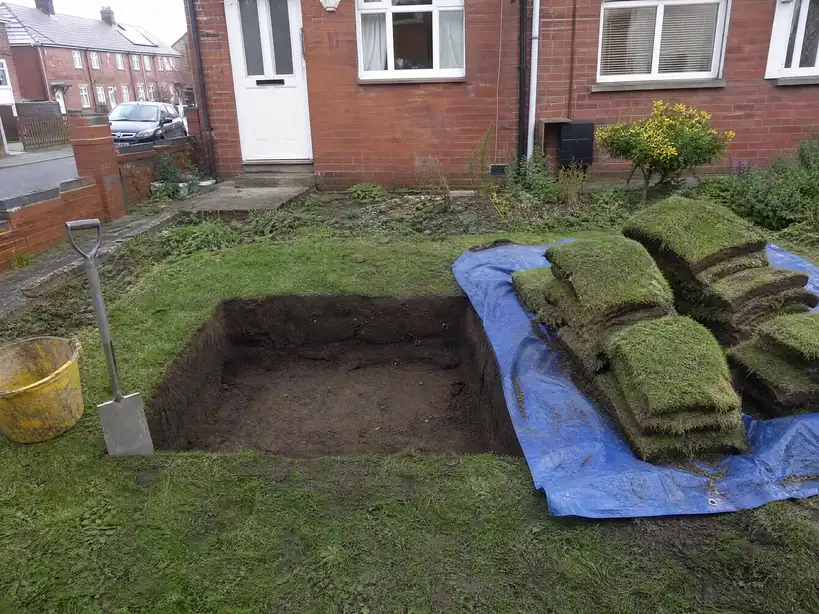
One hole, in the right place
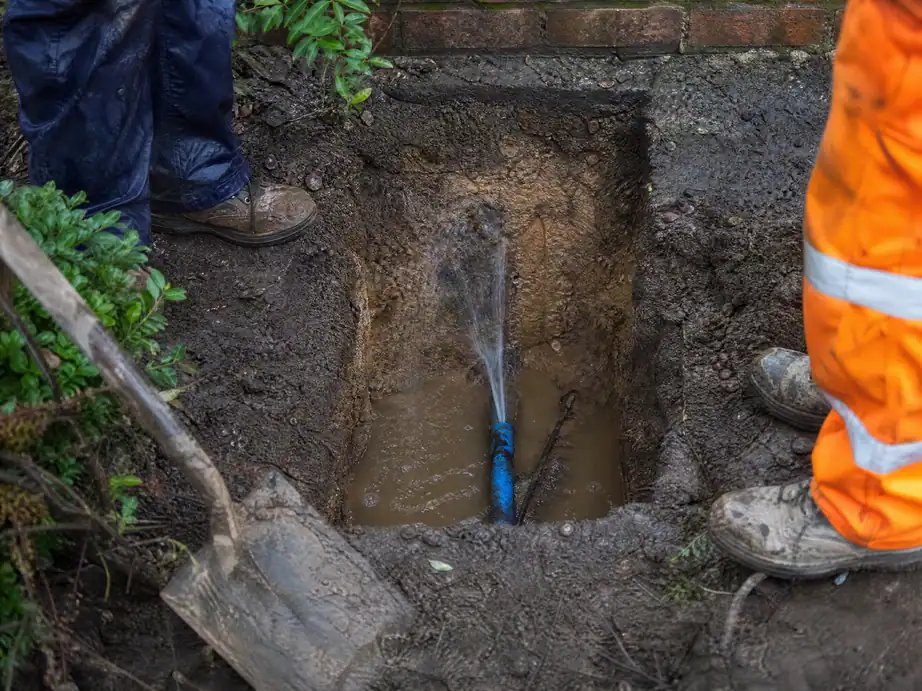
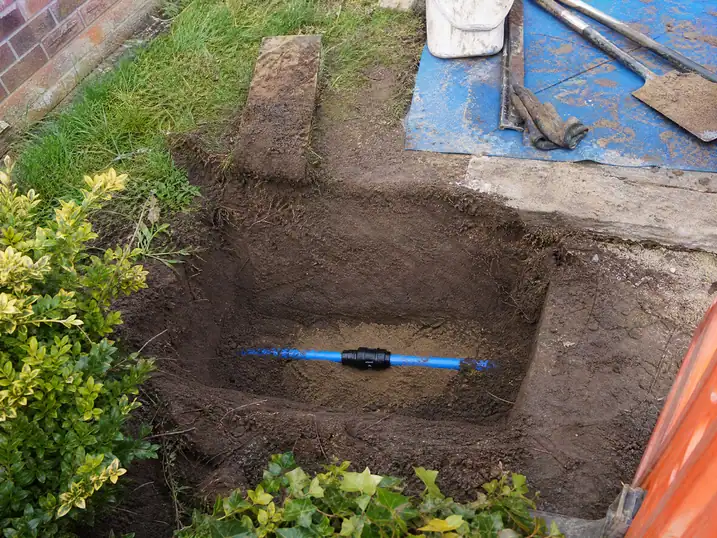
If the leak has already been pinpointed and marked, the repair starts there. If not, it is located first with underground water leak detection. A supply pipe normally sits between 750mm and 1,350mm below the surface, the depth the Water Supply (Water Fittings) Regulations 1999 set to keep it clear of frost and damage. The hole is dug to that depth over the marked spot and made just wide enough to work in safely.
Matching the repair to the pipe
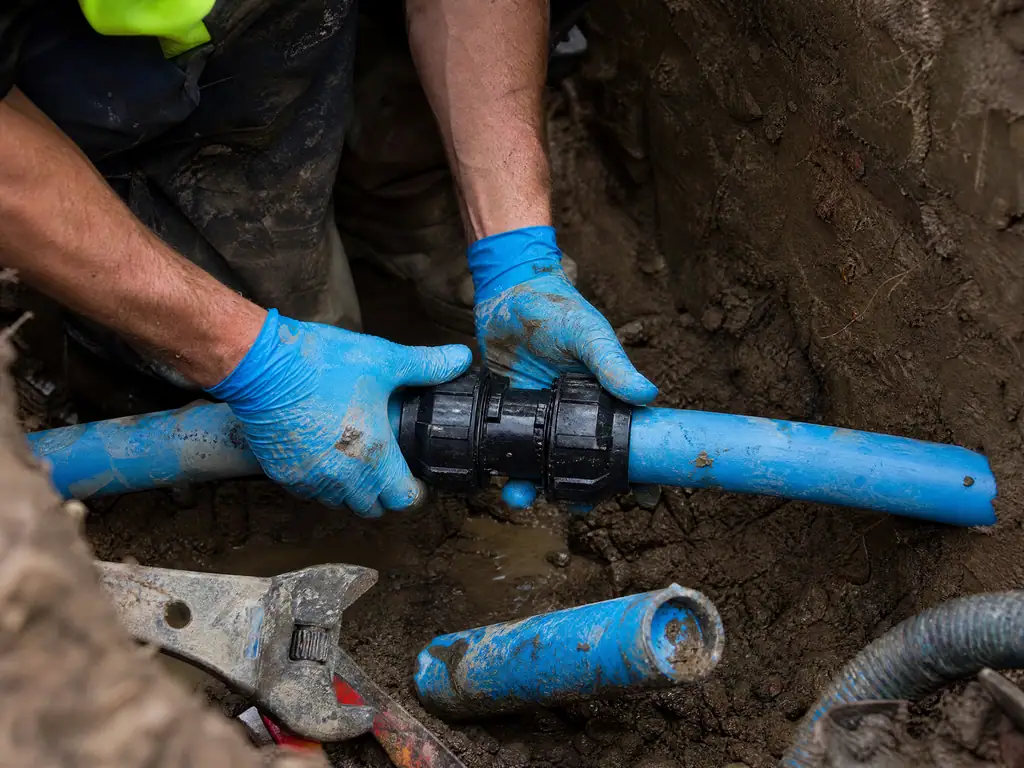
What the pipe is made of decides how it is repaired.
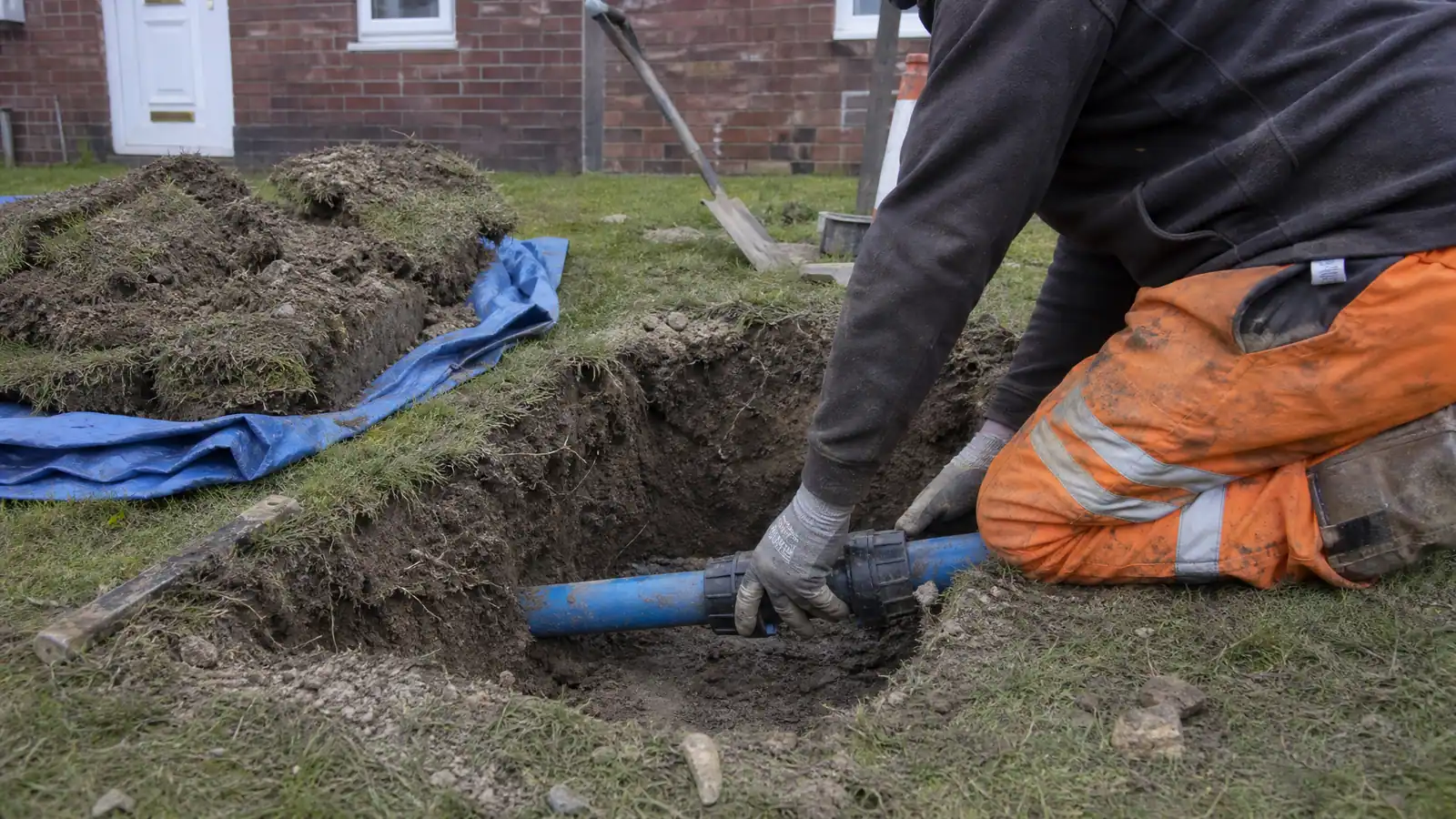
Blue MDPE plastic, the material of most newer and replaced supplies, takes a compression repair coupling or a short new section. Lead pipe can be joined to new plastic with a purpose-made fitting, but a leak on lead is usually a sign of age. Older galvanised iron tends to corrode along its length, so a repair in one place is often followed by a leak somewhere else.
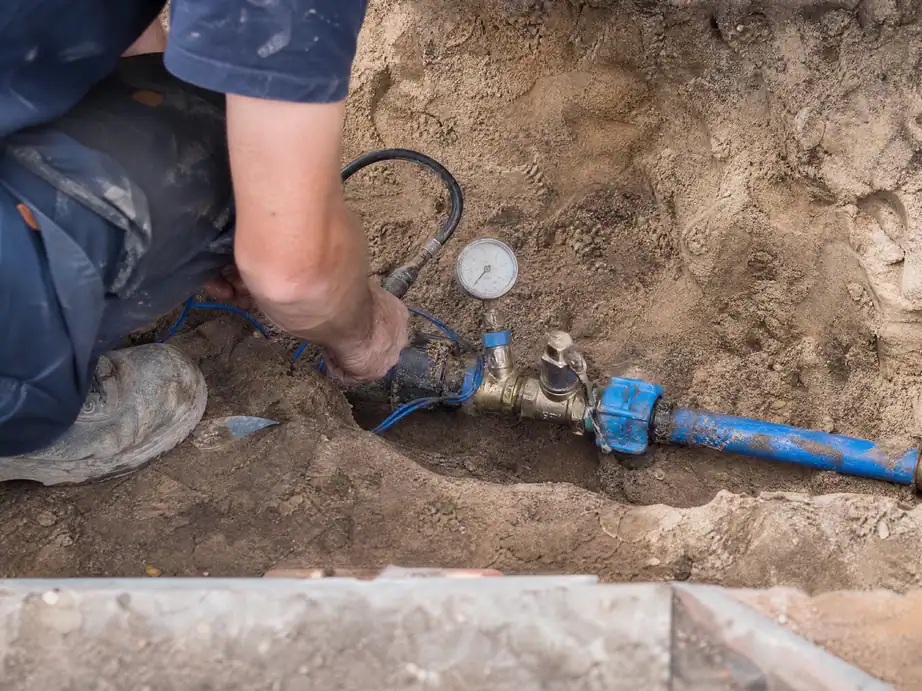
Every fitting used is WRAS-approved, which means it has been tested against the Water Fittings Regulations. After the repair the pipe is pressure-tested with the hole still open, so any problem shows up before the ground goes back.
When a repair isn’t the right answer
A repair makes sense for a single leak on a sound pipe. It makes less sense when:
- the pipe is lead, because Severn Trent‘s Lead Replacement Scheme can give you a free new connection once your side is replaced;
- it has leaked before, or the pipe is badly corroded;
- the pipe runs a long way under a drive that would need lifting in several places.
In those cases the report sets out the cost of a repair against a water supply pipe replacement, often by moling, so you can decide on the numbers.
After the repair: getting the water back
Once the leak is fixed, Severn Trent offers a one-off leakage allowance once the leak is repaired, covering up to 12 months or two bills based on actual meter readings. Keep the invoice and the photos from the repair, because the claim needs proof the leak was fixed. How the Severn Trent leak allowance works covers the claim, and a letter giving you a deadline to repair is explained under private leakage notices.
What's included
- Leak position confirmed on the ground before digging
- One excavation over the leak, sized to the pipe depth
- Damaged section cut out
- Repair coupling or new section to suit the pipe material
- Pressure test after the repair
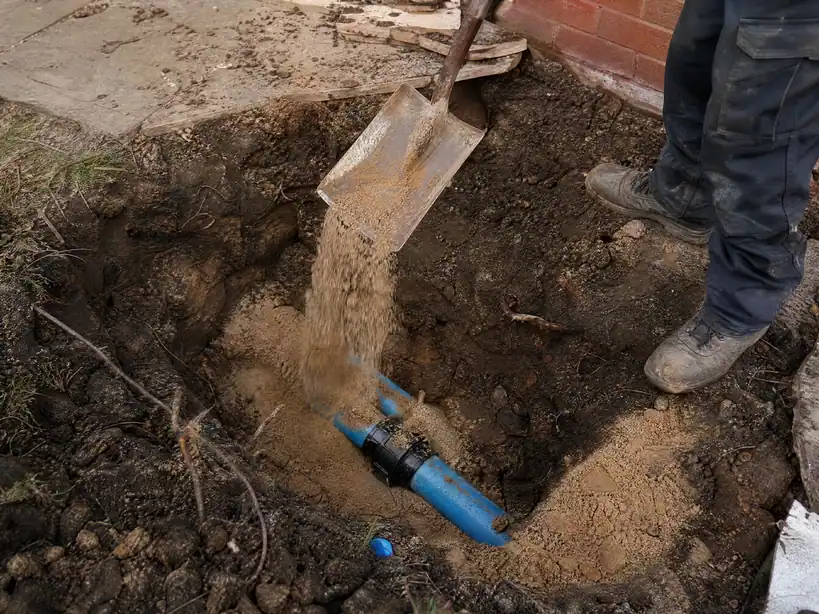
- Pipe bedded and backfilled in layers
- Surface reinstated: turf, paving or temporary cover
- Invoice and photos for your leakage allowance claim
How the options compare
Where the hole goes
- Do it yourself
- Wherever looks wet
- Dig-and-hope operator
- Trial holes along the run
- Proper leak detection
- Over the marked leak
Fittings used
- Do it yourself
- Whatever the shop had
- Dig-and-hope operator
- Often not matched to the pipe
- Proper leak detection
- WRAS-approved, matched to the material
Checked afterwards
- Do it yourself
- By waiting for the next bill
- Dig-and-hope operator
- Not always
- Proper leak detection
- Pressure test before backfilling
If the pipe is past repair
- Do it yourself
- Not spotted
- Dig-and-hope operator
- Patched anyway
- Proper leak detection
- Told plainly, with replacement options